Applied Science in Fire and Emergency Services

Designed for current and aspiring emergency service professionals
Uses a national professional development model for fire service and EMS
Builds job-ready skills and industry-relevant credentials
Prepares graduates for careers in emergency service departments, government agencies, and private organizations

Accredited
The FES curriculum is based on the FESHE (Fire Emergency Services and Higher Education) model through the National Fire Academy.
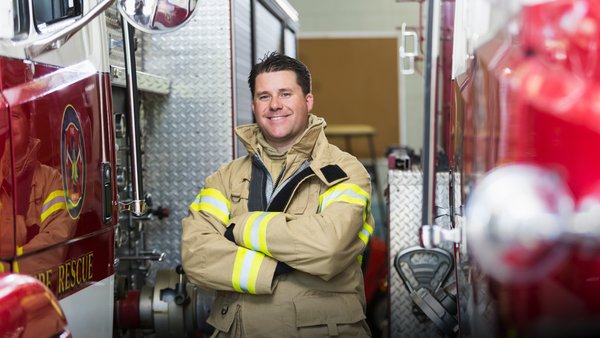
Earn College Credit for Your Firefighter or EMS Certifications
If you're a firefighter, EMT, paramedic, or other emergency services professional, LSU Eunice may award college credit for your qualifying certifications. Saving you time, reducing tuition costs, and moving you one step closer to graduation. Learn More
Admissions
Whether you're a first-time freshman or a transfer student, our admissions team is here to support you from day one.
I have no college credits
Requirements for Freshmen:
- Applicants for admission to the freshman class are normally required to submit scores on the American College Test (ACT) in order to be placed at the appropriate levels in freshman courses, for counseling, and for selection of scholarship recipients.
- Graduates of state-approved high schools or those who hold a G.E.D or HiSET and have not attended another college or university will be considered for admission when they have made application.
- Louisiana residents who are not graduates of state-approved high schools and have not attended another college or university may apply for admission by submitting their G.E.D. or HiSET transcript.
- Louisiana residents who have graduated from a high school not approved by the State Department of Education or who do not have a G.E.D. or HiSET can be admitted under the Ability to Benefit provision.
I have some college credits
Requirements for Transfer Students
- Applicants must have satisfactory records in other colleges and universities to apply for admission.
- Louisiana residents who have attempted fewer than 12 hours of college credit will be considered on the same basis as a student who earns a similar record at LSU Eunice.
- All transfer students must be eligible to re-enroll at the last college or university last attended.
For additional information on admission requirements, please visit LSUE's Admission Portal.

Apply by
Jan 11, 2027

Classes begin
Jan 19, 2027
Tuition
- 60 credit hours
- Total credit hours per program
- $260
- Cost per credit hour
- $3,900
- Total cost with fees and maximum transfer credits
- $15,600
- Total cost with fees
LSUE’s online programs offer competitive, flat-rate tuition with no out-of-state fees. Plus, you may be able to save even more by transferring up to 75% of previous credits.
Tuition & Fees
The final cost of this program will be determined once all transfer credits are evaluated. Transfer credits may apply for up to 75% of degree requirements. Your academic advisor will work with you to determine if and how any prior college credits earned will apply toward your LSUE degree.
For further information about the approval for transfer credits and other requirements, please visit this site.
The total cost above does not include transfer credit or financial aid. Cost per credit hour and fees are subject to change. Fee schedules may vary by program depending on course-specific fees for proctoring and/or books. Please contact a Student Success Coach for more information.
All applicants will be required to meet all Standards of Academic Programs to receive Federal Financial Aid (Grants and Loans). More information can be found here.
Financial Aid Available
LSUE offers multiple ways to help you fund your education, including financial aid, veteran education benefits, and credit for prior learning.
Academics
Students enrolled in the online fire and emergency services program will gain the knowledge and skills to maintain public safety and pursue leadership opportunities in the emergency services sector.
What Will I Learn?
Topics covered in this degree include:
- Critical-thinking skills to analyze and solve a variety of complex problems in a fire and emergency services environment
- Technological advancements that can produce higher levels of safety and survival
- Specialized technical knowledge and skills relevant to subspecialties in the field of fire and emergency services
- Interpersonal and leadership skills to work both independently and cooperatively as a member of a fire and emergency services team
- Awareness of how adopting standardized policies for responding to emergency scenes can minimize near-misses, injuries, and deaths
- The increase in violent incidents and how this impacts safety for emergency services personnel when responding to emergency scenes
- The importance of safety in the design of apparatus and equipment
Concentrations
The Associate of Applied Science degree in Fire and Emergency Services is a good start for those in the fire and emergency services industry wishing to expand their knowledge and expertise allowing them to rise in rank.
The program has been recognized by the National Fire Academy as Fire and Emergency Services Higher Education program.
Two concentrations available with this program:
Fire Service Technology is for those wishing to rise in rank and achievement in the Fire Service field.
Emergency Services Technology are for those wishing to rise in rank in the Emergency Service field.
Courses
The online Associate of Applied Science in Fire and Emergency Services requires 60 credits to earn your degree.
Your personal credit requirements could be less depending on transferable credits and credit received for certifications.
| Course | Credit Hours |
|---|---|
General Education Math |
3 |
General Education Natural Sciences |
3 |
General Education Humanities |
3 |
General Education Social Science |
3 |
General Education Elective |
3 |
ENGL 1001 English Composition |
3 |
ENGL 1002 English Composition |
3 |
FSCI 1001 Principles of Emergency Services |
3 |
FSCI 1101 Fire Behavior and Combustion |
3 |
FSCI 2152 Principles of Fire and Emergency Services Safety and Survival |
3 |
FSCI 2155 Fire Protection Systems and Equipment |
3 |
FSCI 2210 Fire Prevention and Inspection |
3 |
FSCI 2153 Fire Protection Hydraulics |
3 |
FSCI 2502 Building Construction Structural Technology |
3 |
INDS 1102 Hazardous Materials |
3 |
Total Required Hours |
45 |
| Course | Credit Hours |
|---|---|
PBSA 2510 Legal Aspects of Emergency Services |
3 |
EMGT 1200 Occupational Safety and Health for Emergency Services |
3 |
FSCI 2151 Fire Department Organization and Management |
3 |
FSCI 2235 Principles of Arson Investigation |
3 |
FSCI 2154 Firefighting Tactics and Strategy |
3 |
Total Fire Service Technology Concentration Hours |
15 |
| Course | Credit Hours |
|---|---|
PBSA 2510 Legal Aspects of Emergency Services |
3 |
EMGT 1200 Occupational Safety and Health for Emergency Services |
3 |
PBSA 2200 Technology for Emergency Services |
3 |
EMGT 1500 Emergency Management in High-Threat Situations |
3 |
PBSA 2830 Contingency Planning |
3 |
Total Emergency Services Concentration Hours |
15 |
Testimonials

Today's fire and emergency services leaders must adapt to a rapidly changing environment. Gone are the days when the only requirements were guts and leather lungs. This program is designed to help students develop the leadership and critical thinking skills needed to lead organizations through evolving changes.
Careers
Career Opportunities
- Chief Officer in Fire Departments
- Management in State Fire Marshal
- Safety Officer
- Firefighter
- Emergency Medical Services (EMS) Provider
- Law Enforcement Officer
- Fire Alarm Technician
- Public Safety Telecommunicator